
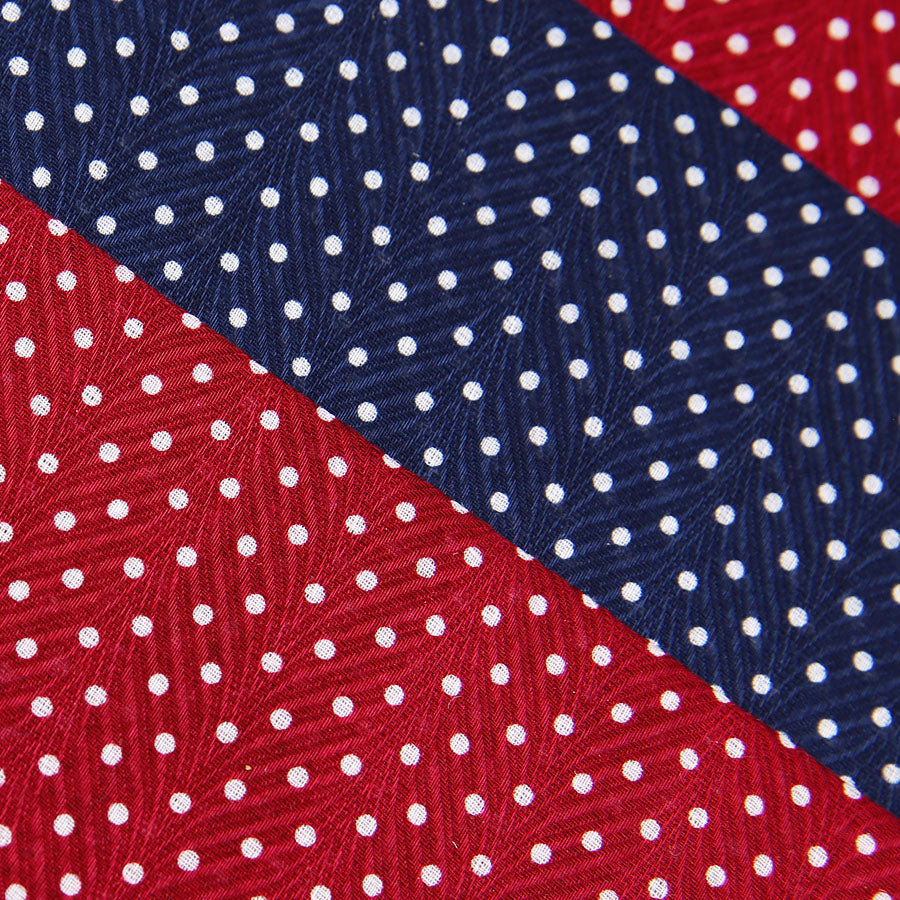
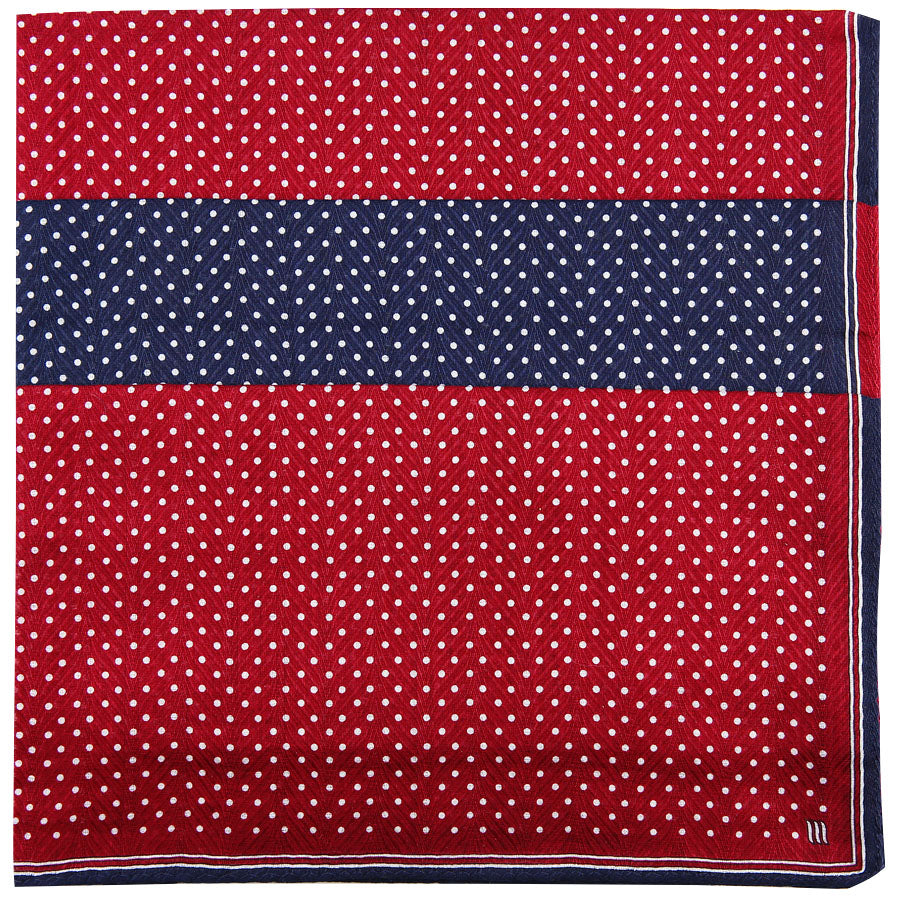
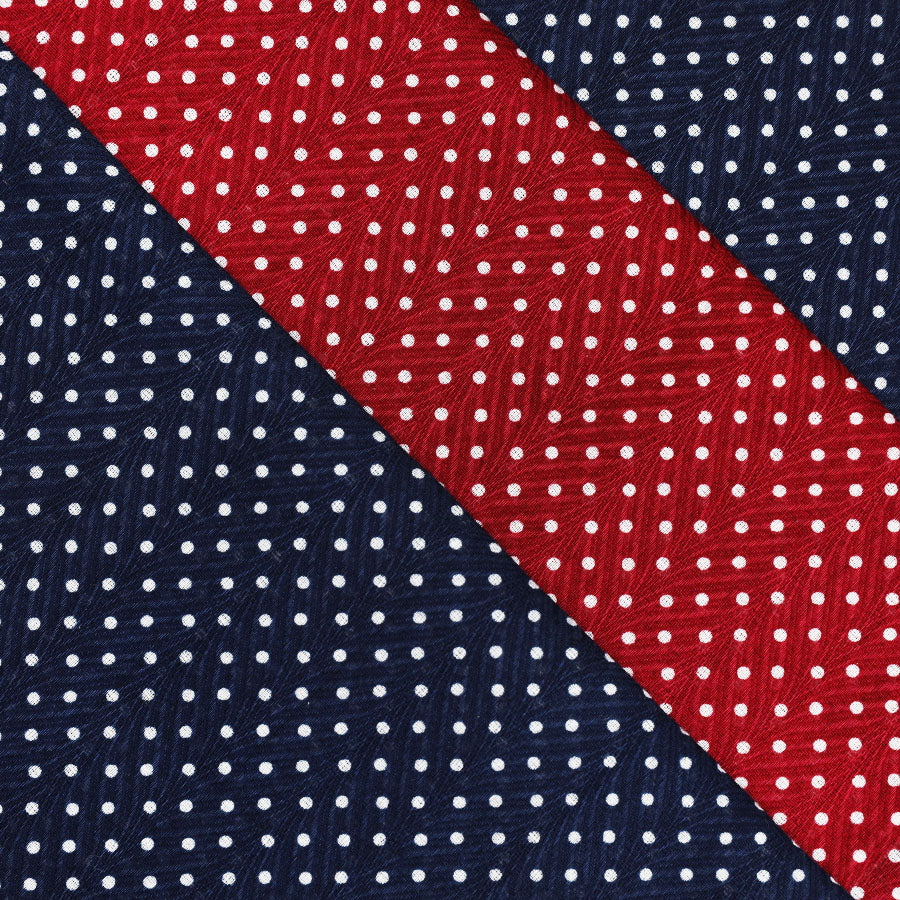
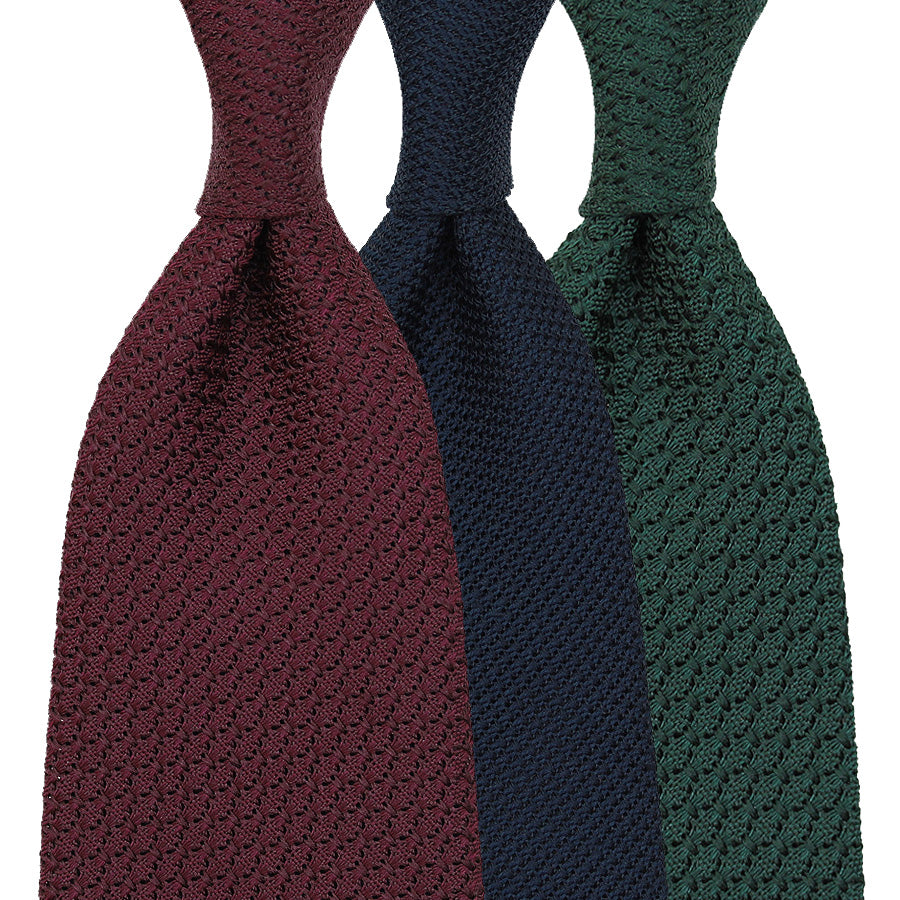
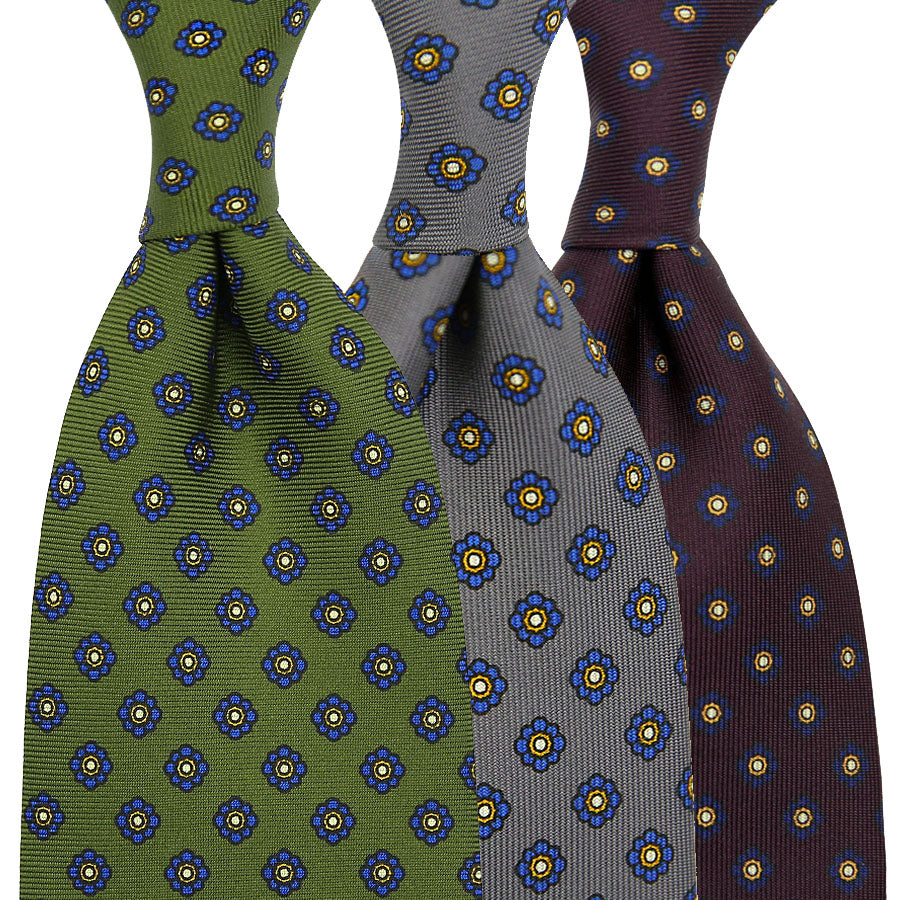
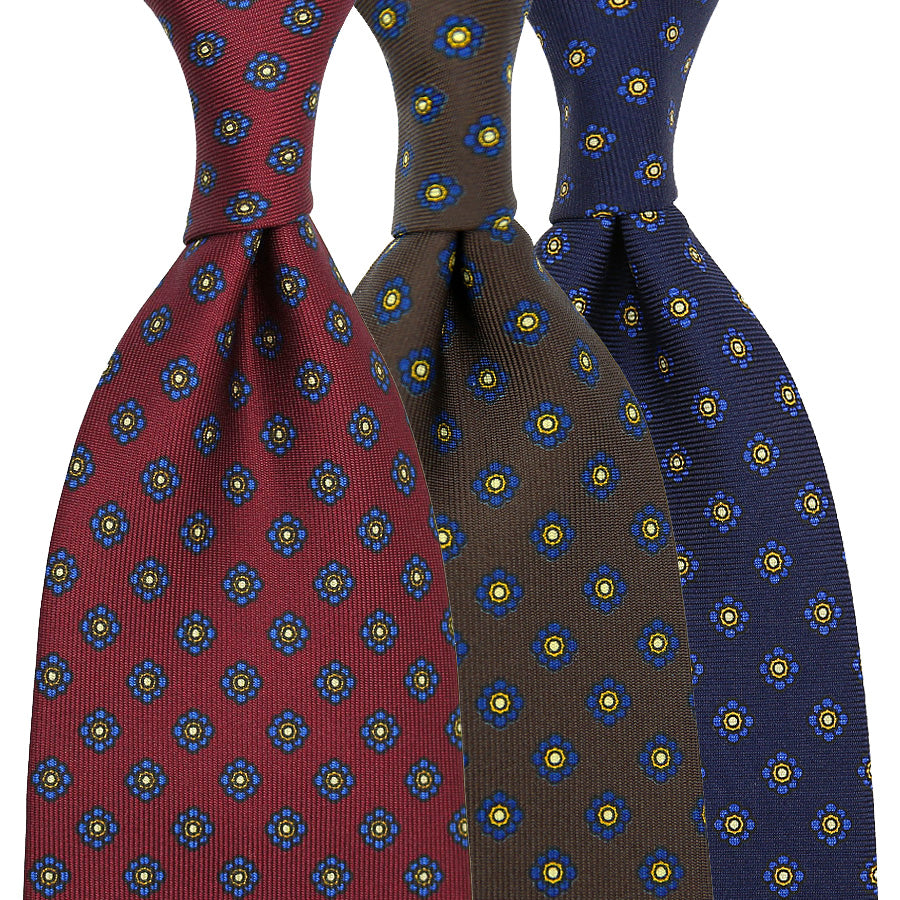

Shibumi Firenze ties consist of three components: upper material, lining, thread. The upper material is, to put it simply, the part of the tie you can see. We normally use pure silk, but also offer seasonal variants like linen, cashmere, ramie and wool.
The tip on Shibumi ties is usually hand-rolled (or untipped). In this picture, we see the hand-rolling, which means that the upper material is carefully folded into a roll by hand and secured with stitches:

This method is the most time-consuming and the one requiring the greatest care and most experienced seamstresses (and thus the most expensive). No other part of the tie requires as much skill and experience as this one: the stitches should be as close and even as possible. Here is a close up of navy glencheck tie:

Here is a close-up of a white grossa grenadine tie:
One of the distinctive characteristics of hand-rolled grenadine ties—both grossa and fina—is their slightly see-through tip. This subtle transparency adds a relaxed, nonchalant touch, softening the formality and giving the tie a refined yet effortless appeal.
You can see the alternative finishing option—self-tipped—here on a navy glencheck tie:

Here is a close-up of a silver grossa grenadine tie in self-tipped construction: 
The tip is not see-through and therefore appears more formal, making it particularly suitable for conservative (business) settings.
Self-tipped (or lined) refers to the finishing of the tie’s tip using the same fabric as the outer shell. A piece of the tie’s main material is cut and sewn onto the backside of the tip, creating a seamless and cohesive appearance. This method requires more of the outer fabric and is therefore more material-intensive. On lower-quality ties, a different, often cheaper fabric is used for the tipping as a cost-saving measure. We believe that only self-tipped ties achieve a truly refined look, which is why all of our lined ties are finished in this way.
On the small and wide blade, the tie is held together by a decorative bartack stitch, which we usually make tone on tone. This stitch can be hidden as well, but we decided on the traditional bartack stitch as a nod to the great tradition of handmade ties in Italy.
On the topic of making it special: all our labels are sewn in by hand, also the loop you can use to secure the smaller blade of the tie. This loop is also not just added on top of the tie but integrated in the long seam, making it much less likely to rip off and more pleasant to look at.

The long seam is made using just one long piece of thread, which sticks out in a small loop at the small and wide end of the tie. This loop allows you to pull the tie back into shape should it have gotten wrinkled in a tight knot or barfight.
On most ties, we use a double lining: one layer of pure wool and one of pure cotton. This combination provides structure while maintaining a soft, natural feel. It also helps the knot hold its shape throughout the day, so there is no need for constant readjustment. When working with particularly heavy fabrics—such as 50oz silk or thick wool—we opt for a single lining in pure wool, allowing the tie to retain its balance and drape without unnecessary bulk.

Double-lining

Single-lining
Here are some additional images where you can compare self-tipped and hand-rolled finishing side by side: